Oral Health News
Supervised toothbrushing: what the school scheme means
Funding for supervised brushing targets England’s youngest children, but families still need home routines and access to dental care.
By The Smile Editorial Team
Published · Updated · 5 min read
Quick answerEngland’s supervised toothbrushing programme is designed to help three- to five-year-olds brush with fluoride toothpaste in participating nurseries and schools. It targets disadvantaged areas and adds to, rather than replaces, twice-daily brushing at home and dental check-ups.
Not medical advice. General information only. We don't diagnose or treat. Never try dental treatment at home. Always see a dentist about symptoms.
Timeline
March 2025
The government announced funding for supervised toothbrushing in participating nurseries and primary schools in disadvantaged areas.
April 2025
Local authority funding was scheduled to become available for delivery of the programme.
Two to three years after rollout
The government expected measurable improvements in children’s oral health; this was a forecast, not a reported result.
For parents, the practical question behind England’s supervised toothbrushing programme is straightforward: what changes if a child brushes at nursery or school? The additional session is intended to build a familiar daily habit, with an adult overseeing brushing, while families continue their usual care at home.
Announced in March 2025, the government-backed programme targets three- to five-year-olds in disadvantaged communities. Its potential benefit extends beyond a cleaner mouth: tooth decay can cause pain and disrupt eating and sleep. But a brushing session cannot diagnose a problem or replace an appointment when a child needs treatment.
What happened
The government committed £11 million to local authorities, with funding available from April 2025. Delivery was planned through participating early years settings, including nurseries and primary schools, in England’s most deprived areas. This is an England programme, rather than a single new scheme covering every UK nation.
The Department of Health and Social Care said it could reach up to 600,000 children each year. That is an intended reach, not a count of children already taking part. Settings need to participate, so a child’s age alone does not establish whether their nursery or school offers sessions.
A supply partnership also pledged 23 million toothbrushes and toothpastes over five years. Those supplies support delivery, but the central intervention is the supervised routine: helping young children use a suitable amount of toothpaste and practise brushing consistently.
The financial case rests on estimated treatment costs avoided. The government put the return at roughly £3 for every £1 spent, with projected NHS savings of £34 million over five years. These are forecasts, not money already saved, and should be assessed against what the programme actually delivers.
Who should parents ask?
Start with the nursery or school rather than assuming every setting has joined. Ask whether it participates, which children are included and how families receive information about sessions. The local authority may also be able to explain arrangements in the area.
Participation does not come with a dental appointment. Families looking for care face a separate access question, explored in our guide to who benefits from wider access to NHS dental appointments.
The background
Tooth decay develops when bacteria in the sticky film on teeth, called plaque, use sugars from food and drink to produce acids. Repeated acid attacks can damage the tooth’s hard outer surface. Fluoride toothpaste helps strengthen that surface and makes it more resistant to acid.
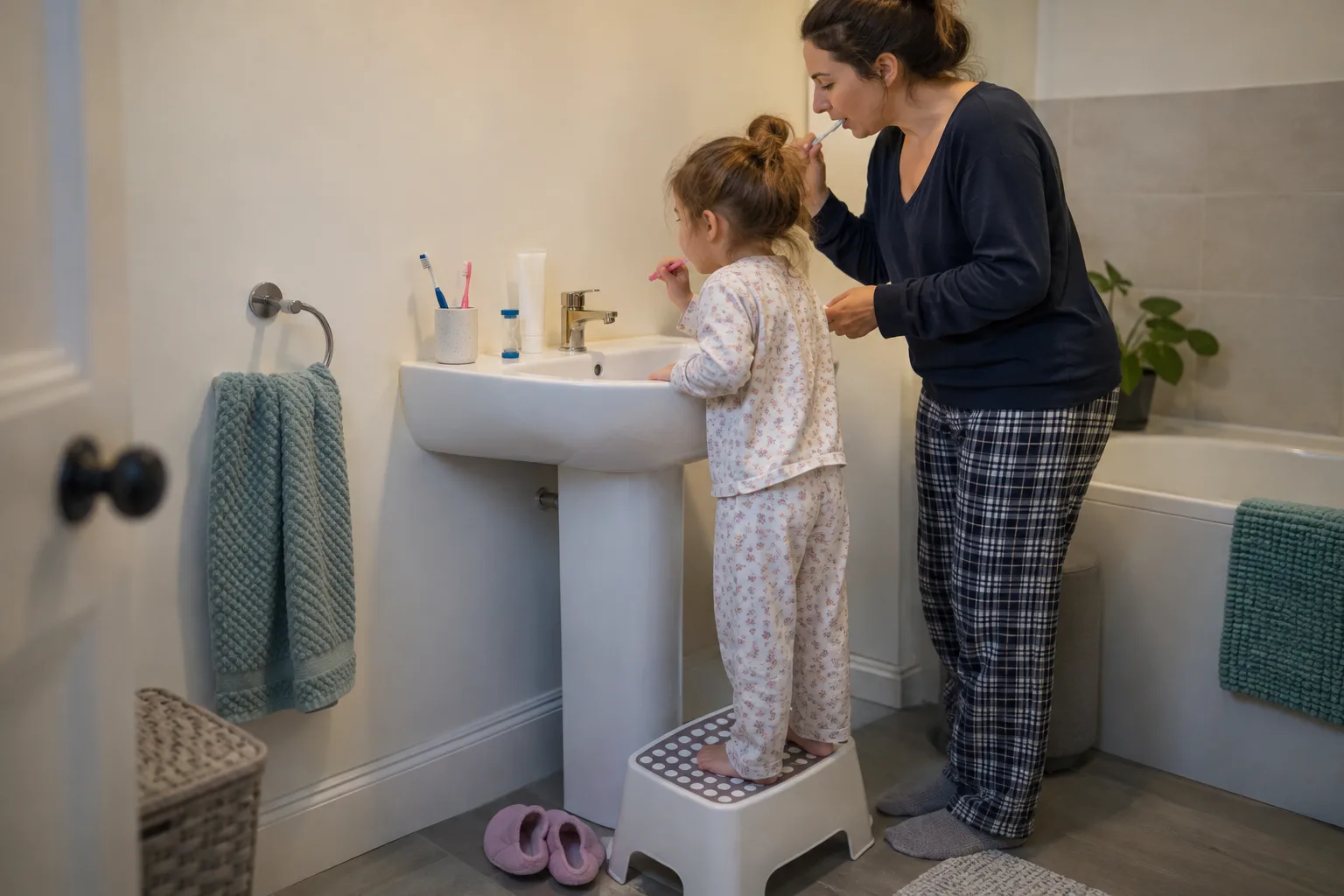
Young children are still developing the coordination needed to clean every tooth. A child enthusiastically moving a toothbrush around is not necessarily reaching the back teeth or the gumline. NHS guidance therefore advises parents to help with brushing until children are at least seven.
What stays the same at home?
NHS advice is to brush for about two minutes twice daily: last thing at night and on one other occasion. A nursery session should be treated as additional support, not a reason to drop the bedtime brush. That evening routine remains important even after a busy day.
For children aged three to six, NHS guidance recommends a pea-sized amount of toothpaste containing at least 1,000 parts per million fluoride. The concentration appears on the packaging as “ppm”. Children should spit out after brushing rather than rinse with water, which washes away the concentrated fluoride left on their teeth.
For younger siblings under three, the recommended amount is a smear, not a pea-sized blob. Adults should dispense toothpaste and discourage swallowing it. If a child struggles with the taste, sensation or movement of brushing, ask the dental team for practical help rather than abandoning the routine.
The programme is not a reason to buy an expensive toothbrush. A small-headed brush suitable for the child’s age is a practical starting point. Our explainer on smart toothbrushes and whether they replace flossing examines the wider distinction between helpful features and the cleaning tasks that still need doing.
Food habits matter alongside brushing. NHS advice is to limit sugary foods and drinks and keep them to mealtimes rather than offering them repeatedly between meals. Water or plain milk are suitable everyday drinks for this age group. Brushing does not cancel out frequent sugar exposure.
What people are saying
The British Society of Paediatric Dentistry welcomed the announcement after campaigning for supervised toothbrushing for a decade. Its response emphasised prevention and reducing differences in oral health between communities, while acknowledging that putting the programme into practice would take further work.
The British Dental Association also supported the move, but argued that ministers needed to act more widely. Its priorities included restoring access to dental services and addressing the marketing, labelling and reformulation of food and drink. That places brushing within a broader approach, rather than treating it as the whole answer.
England’s chief dental officer reinforced the importance of twice-daily brushing with fluoride toothpaste. For families, that message connects organised sessions with ordinary home care: school staff can reinforce a skill, but parents and carers remain involved in the child’s daily routine.
The concern about access is especially relevant when a child already has pain. A preventive programme and a treatment service do different jobs. Our explanation of whether more dentists mean better NHS access looks at why workforce announcements need to translate into appointments patients can actually book.
What happens next
The government expected measurable improvements in children’s oral health and narrower inequalities within two to three years. Assessing that ambition means looking beyond the number of brushes distributed: participation, regular delivery and changes in decay levels all matter when judging whether the programme is working.
Questions worth asking your setting
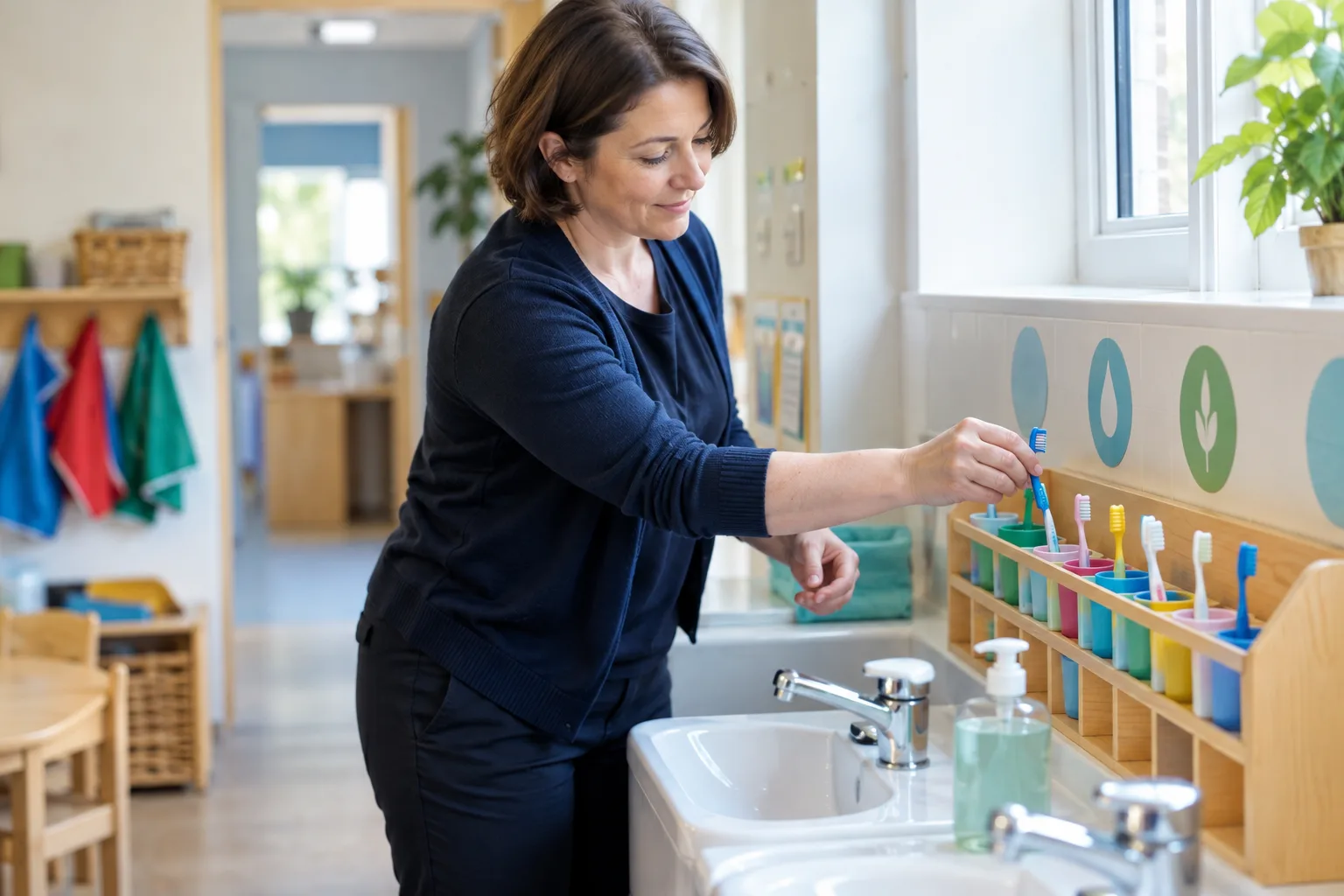
Parents can ask who supervises sessions, how children are helped to brush and how individual toothbrushes are identified, stored and kept separate. Shared brushing activities need clear hygiene arrangements; children should never share a toothbrush.
Families should also ask how staff accommodate additional needs and explain participation to children. A child who finds brushing difficult may need a gradual, supported approach. Consistent communication between home and the setting can help adults avoid giving conflicting instructions.
Alongside the brushing announcement, the government confirmed plans to expand water fluoridation in north-east England, estimating that another 1.6 million people would be reached. It also set out ambitions to reform NHS dentistry. Our guide to who could benefit from dental contract changes explains why funding arrangements matter to patients.
Meanwhile, children should continue attending dental check-ups at intervals advised by their dentist. NHS dental treatment is free for under-18s, although finding an available appointment can still be difficult. Brushing sessions do not examine teeth or identify every developing problem.
If a child has persistent toothache, bleeding gums, mouth sores, an unexpectedly loose tooth or worsening symptoms, arrange dental advice rather than waiting for the programme to help. Severe swelling that affects breathing or swallowing needs emergency medical help: call 999 or go to A&E.
Related: Soft drinks levy: what the 2028 changes mean for teeth
Related: Supervised toothbrushing: what families still need to do
Why this matters
For parents and grandparents, the useful next step is to check what the child’s setting actually offers, then keep home brushing consistent with NHS advice. For families elsewhere in the UK, local arrangements may differ from England’s programme. Ask a dentist or hygienist to demonstrate brushing if reaching every tooth is difficult, and keep preventive support separate from the need for treatment. Our guide to oral pain and dental costs explores why getting care when symptoms develop remains an important part of the picture.
Common questions
- What is supervised toothbrushing in schools?
- It is an organised session in which young children brush with fluoride toothpaste under adult supervision. England’s programme targets three- to five-year-olds in participating nurseries and primary schools in disadvantaged areas.
- Is the toothbrushing scheme available across the UK?
- This funding announcement applies to England, not every UK nation. Parents should ask their nursery, school or local authority about the arrangements available locally.
- Does brushing at nursery replace brushing at home?
- No. The nursery session adds support rather than replacing home brushing. NHS guidance recommends brushing twice daily for about two minutes, last thing at night and on one other occasion.
- How much toothpaste should a four-year-old use?
- A four-year-old should use a pea-sized amount of toothpaste containing at least 1,000 ppm fluoride, according to NHS guidance. An adult should help with brushing, and the child should spit out without rinsing.
- When can children brush their teeth without help?
- NHS guidance says parents should help children brush until they are at least seven. Younger children are still developing the coordination needed to clean all tooth surfaces effectively.
- How much could supervised toothbrushing save the NHS?
- The government forecast £34 million in avoided NHS treatment costs over five years. That is a projected saving, not a measured result from the announced rollout.
- Does my child still need dental check-ups?
- Yes. Supervised brushing does not include a dental examination or replace check-ups. Follow the recall interval advised by your dentist, and seek dental advice if your child develops persistent pain or other concerning symptoms.
Sources
This article was written by The Smile using the sources listed above. Last updated 14 October 2026. It does not name or recommend brands; sponsorship appears only in clearly labelled panels.