Oral Health News
Supervised toothbrushing: what families still need to do
Six million brushing supplies have been delivered as Joe Wicks backs a campaign linking supervised sessions with children’s routines at home.
By The Smile Editorial Team
Published · 5 min read
Quick answerSupervised toothbrushing gives children a supported brushing session at nursery or school, but it does not replace brushing at home or dental check-ups. Families should still help children brush twice daily with fluoride toothpaste, including last thing at night.
Not medical advice. General information only. We don't diagnose or treat. Never try dental treatment at home. Always see a dentist about symptoms.
Six million toothbrushes and toothpastes have been delivered in the first year of the government’s supervised toothbrushing scheme, with fitness coach Joe Wicks now backing a campaign to help families carry the habit home. For parents, the important distinction is that a supported brushing session is extra help, not a replacement for the bathroom routine or a dentist’s appointment.
The announcement brings two questions into focus: how many children are actually receiving regular sessions, and what happens when a child already needs care? Dental representatives have welcomed the initiative while warning that participation is uneven and access to NHS dentistry still needs attention.
What happened
The Department of Health and Social Care has developed Brush With Us to reinforce the habits children learn through supervised brushing. Wicks will front the campaign, bringing a familiar public figure to a message centred on regular, two-minute brushing and family routines.
The delivery milestone covers toothbrushes and toothpastes together. It should not be read as six million children reached, six million brushing sessions completed or six million dental problems avoided. Supplies are an essential part of running a programme, but counting them measures distribution rather than changes in children’s dental health.
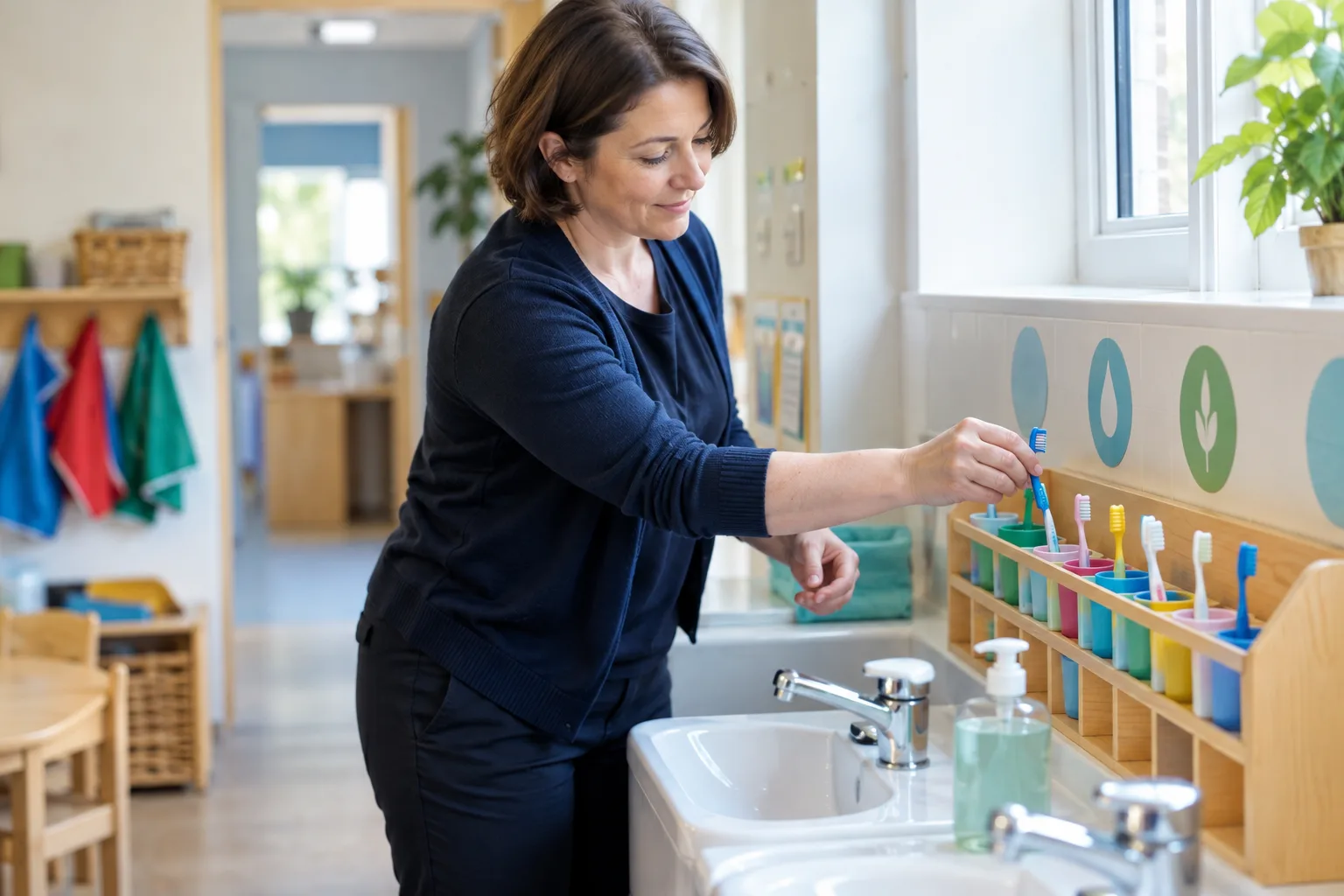
In a supervised session, children brush with support from trained staff in a nursery or school setting. The practical purpose is to make brushing a repeated activity and help children learn what to do, rather than relying on a one-off lesson about teeth.
For families in England, access depends on local provision and whether their child’s setting participates. A national campaign does not mean every school or nursery has begun offering sessions. Parents can ask the setting directly whether it takes part and how families are involved.
Our guide to what the supervised toothbrushing school scheme means explains the programme’s place in children’s everyday dental care. The useful question for a participating setting is how its sessions connect with the brushing children do before and after the school day.
The background
Tooth decay develops when bacteria in dental plaque use sugars from food and drink to produce acids. Plaque is the sticky film that builds up on teeth; repeated acid attacks can gradually damage the hard outer layer, called enamel. Early decay may not cause obvious pain.
Brushing removes plaque, while fluoride in toothpaste helps strengthen enamel against acid damage. The NHS recommends brushing for about two minutes twice a day: last thing before bed and on one other occasion. A session during nursery or school should not become a reason to drop bedtime brushing.
Getting the toothpaste amount right
NHS advice distinguishes between a toothpaste’s fluoride concentration and how much goes on the brush. Concentration appears on the packaging as parts per million, usually shortened to ppm. For children under three, the guidance is a smear of toothpaste containing at least 1,000ppm fluoride.
Children aged three to six should use a pea-sized amount containing at least 1,000ppm fluoride. From age seven, NHS guidance recommends toothpaste containing 1,350–1,500ppm fluoride. These are general recommendations; a dental professional may give different advice after assessing a child’s needs.
Children should spit out excess toothpaste after brushing rather than rinse immediately with water, which washes away the concentrated fluoride left on the teeth. A large blob of toothpaste is unnecessary, and young children need supervision to discourage swallowing it or eating it from the tube.
Why an adult still needs to help
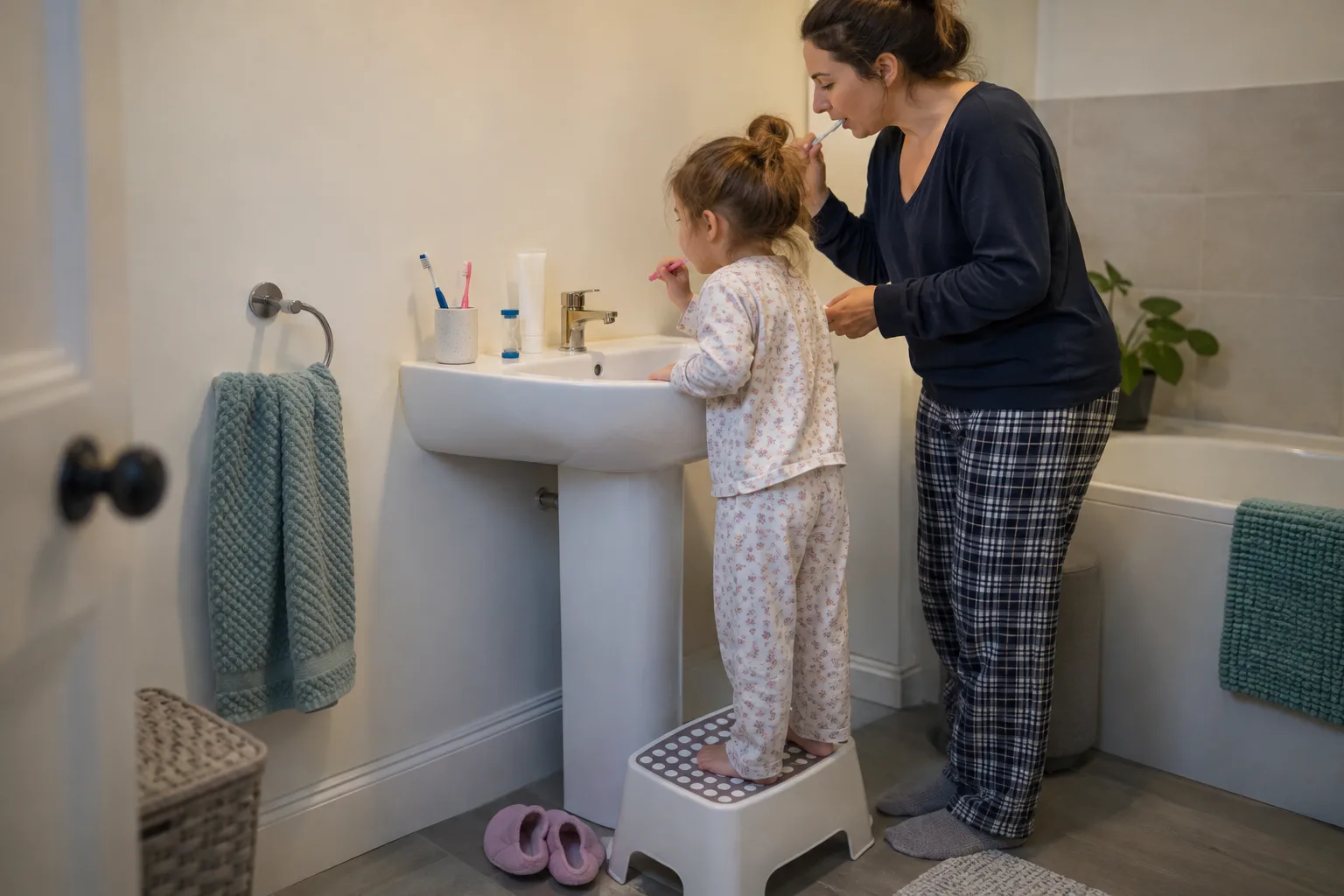
The NHS advises parents to brush children’s teeth, or supervise their brushing, until they are at least seven. Being able to hold a brush is not the same as cleaning every surface reliably. Some older children also need practical support, particularly if coordination or additional needs make brushing difficult.
A manual or electric toothbrush can be used; the important points are reaching all tooth surfaces and using it properly. An app or timer may help a child stay engaged, but it cannot check every part of the mouth. Our explainer on smart toothbrushes and their cleaning limits looks at why technology does not replace technique.
Food and drink habits matter alongside brushing. Keeping sugary foods and drinks to mealtimes reduces the number of separate sugar exposures through the day. Water or plain milk are straightforward drinks between meals. Repeated sipping of sugary drinks means repeated opportunities for plaque bacteria to produce acid.
What people are saying
Wicks has presented the campaign as a manageable habit for busy households, drawing on his experience as a parent. That emphasis recognises a practical obstacle: knowing the advice does not automatically make it easy to follow when a child resists brushing or the evening routine runs late.
The British Dental Association supports supervised brushing, but its chair, Eddie Crouch, has warned that uptake has been low in some areas. He hopes Wicks’s involvement will encourage participation. His wider concern is that children also need timely access to dental care, rather than help arriving only once problems become urgent.
The Association of Dental Groups has also welcomed the campaign. Its executive chair, Neil Carmichael, linked progress in children’s oral health with having enough dentists available. For families, the practical test of workforce improvements is whether they translate into appointments nearby, not simply more people qualifying.
These responses point to two distinct needs: support with daily care and access to clinical assessment. Supervised brushing addresses the first, but cannot provide the second. Our examination of who benefits from wider NHS dental access explores why availability matters alongside prevention initiatives.
What happens next
The next useful measures are participation and continuity: which settings offer sessions, how regularly children receive them and whether the programme reaches communities with greater dental needs. Assessing changes in decay requires follow-up on children’s dental health; a delivery total alone cannot establish that outcome.
What to ask your child’s setting
Parents can ask who supervises brushing, which toothpaste is used and how staff support children who find the activity difficult. Settings should also be able to explain consent arrangements, how individual brushes are identified and how they are stored hygienically without touching one another. Toothbrushes should never be shared.
If a child finds the taste, texture or sensation uncomfortable, discuss that with staff and a dental professional. Understanding the difficulty is more useful than assuming reluctance is simply bad behaviour. Consistent support between home and the setting can help avoid conflicting messages or unnecessary pressure.
Keep dental appointments separate from the scheme
Children should see a dentist when their first milk teeth appear, with subsequent check-ups at intervals advised by the dental team. NHS dental treatment is free for children under 18. Taking part in school brushing does not mean a child has been examined or that an existing problem has been ruled out.
Persistent toothache, bleeding gums, mouth sores, a loose permanent tooth or worsening symptoms need dental assessment. Do not wait for a school session or routine reminder. If a child has severe swelling affecting breathing or swallowing, call 999 or go to A&E.
Why this matters
For UK families, the practical value of supervised brushing is extra support with a daily task, particularly when home routines are difficult. Ask your child’s setting what it offers, keep bedtime brushing in place and tell the dental team about any difficulties with technique or toothpaste. Help with brushing and access to treatment serve different purposes: neither makes the other unnecessary. Our guide to whether more dentists will improve NHS access explains the appointment challenge alongside these preventive efforts.
Common questions
- Does school toothbrushing replace brushing at home?
- No. Supervised sessions provide extra support, but children still need brushing at home. NHS guidance recommends brushing twice daily with fluoride toothpaste, including last thing before bed.
- Does six million brushing supplies mean six million children took part?
- No. The figure counts toothbrushes and toothpastes delivered, not individual children. It does not establish how many regular sessions took place or whether tooth decay declined.
- Is supervised toothbrushing available in every school?
- No. Availability depends on local provision and whether a nursery or school participates. Ask your child’s setting whether it offers sessions and how parents give consent.
- How much toothpaste should a child use?
- Children under three should use a smear; those aged three to six should use a pea-sized amount. NHS guidance recommends at least 1,000ppm fluoride for these ages and 1,350–1,500ppm from age seven.
- When can children brush their teeth without help?
- NHS guidance recommends adult help or supervision until children are at least seven. Some older children still need support with coordination, reaching every tooth surface or additional needs.
- Should children rinse after brushing their teeth?
- Children should spit out excess toothpaste rather than rinse immediately with water. Rinsing washes away the concentrated fluoride left on the teeth, and young children need supervision to discourage swallowing toothpaste.
- Do children still need a dentist if they brush at school?
- Yes. School brushing is not a dental examination and cannot rule out decay or other problems. Children should attend check-ups at intervals advised by their dental team and have persistent pain or other concerning symptoms assessed.
Sources
This article was written by The Smile using the sources listed above. Last updated 14 October 2026. It does not name or recommend brands; sponsorship appears only in clearly labelled panels.