Whitening & Smile Care
Can a smart toothbrush replace flossing?
Camera-equipped brushes promise more targeted cleaning, but the useful questions concern plaque removal, running costs and what still needs doing by hand.
By The Smile Editorial Team
Published · 6 min read
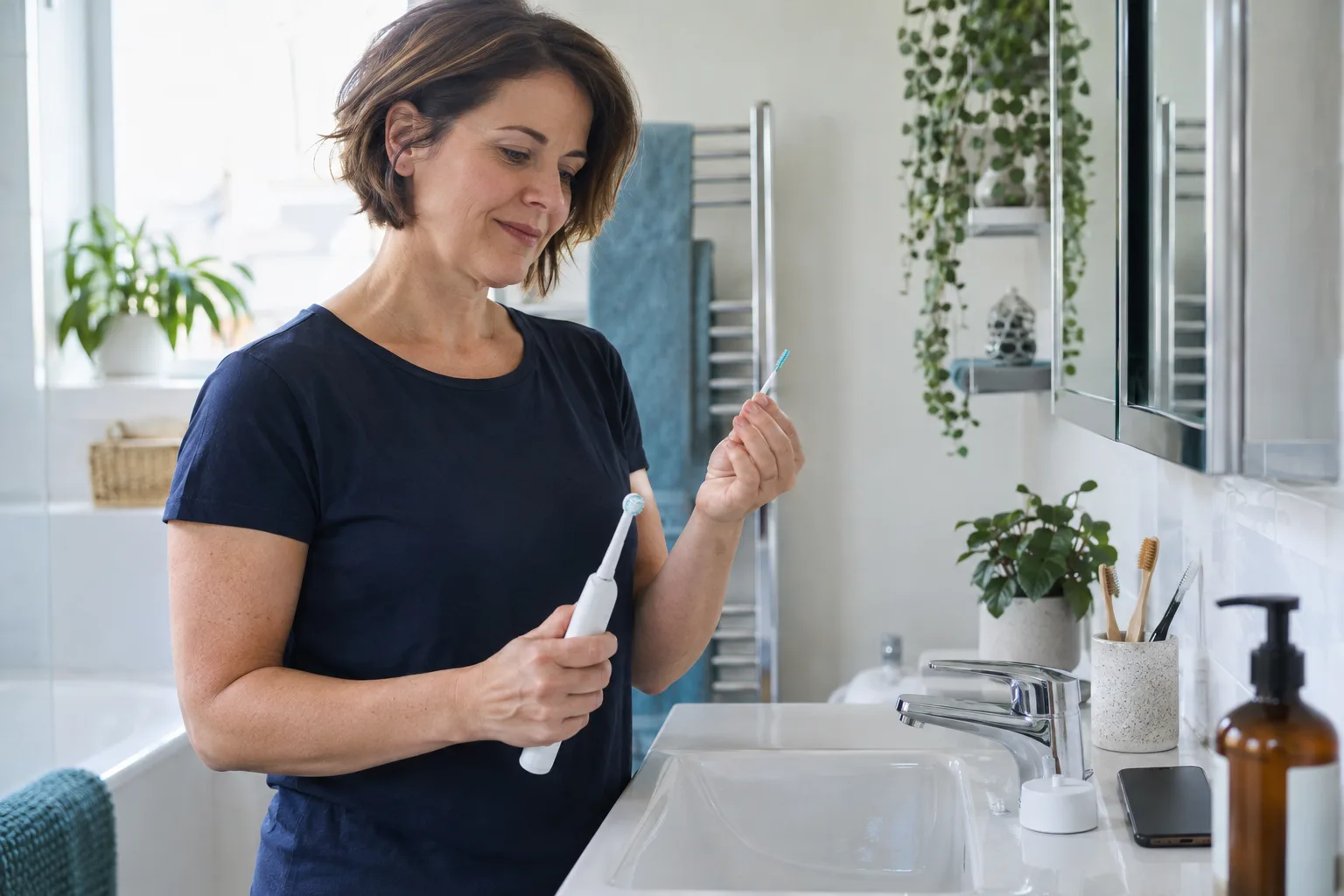
Quick answerA smart toothbrush with water jets should not automatically replace floss or interdental brushes. NHS guidance still recommends daily cleaning between teeth, and a camera or app does not establish that a device cleans those spaces adequately.
Not medical advice. General information only. We don't diagnose or treat. Never try dental treatment at home. Always see a dentist about symptoms.
Electric toothbrush technology now includes cameras that locate gaps between teeth and trigger liquid jets during brushing. The appeal is straightforward: combine two bathroom jobs in one device. For anyone who finds flossing awkward, that sounds more useful than another brushing mode.
But identifying a gap is not the same as demonstrating that it has been cleaned adequately. The practical question is not how much technology fits inside the handle, but whether it changes the daily routine your mouth needs. For UK consumers, established advice on fluoride toothpaste and cleaning between teeth remains the starting point.
What happened
Camera-guided brushing brings together several functions: a powered brush head, a liquid reservoir, a small camera and software designed to recognise spaces between teeth. The intended benefit is to direct bursts of liquid into those spaces while the brush cleans tooth surfaces.
An accompanying app can guide brushing around different parts of the mouth or display a camera feed. These are different functions with different purposes. A prompt may help someone remember the inside surfaces of their teeth; an image does not tell them whether their gums are healthy.
What would count as convincing evidence?
For a combined brush-and-jet device, the important comparison is with an ordinary brushing routine that includes appropriate interdental cleaning — cleaning between teeth. Useful research would measure plaque and gum health over time, rather than relying only on whether users describe their teeth as feeling smooth.
It would also need to separate the contribution of the jets from that of the brush head. Otherwise, good overall cleaning results would not establish that the liquid system could take over the job of floss or interdental brushes.
Reliability matters alongside laboratory performance. A camera needs a clear view, and a liquid system needs filling and maintenance. Before paying for these features, check the instructions for cleaning the lens, clearing blockages and using the brush if the jet function stops working.
The background
Plaque is a sticky film of bacteria that builds up on teeth. Brushing removes it from accessible surfaces, but the contact areas and spaces between teeth need separate attention. Fresh breath or a minty aftertaste cannot show how much plaque remains.
The NHS advises brushing for about two minutes twice a day, including last thing at night, with fluoride toothpaste. Adults should choose toothpaste containing at least 1,350 parts per million fluoride; the concentration is printed on the packaging. Spit out afterwards rather than rinsing straight away.
Manual and electric toothbrushes can both clean effectively when used thoroughly. A comfortable handle, a head that reaches the back teeth and a technique you can manage are more relevant to everyday use than the number of settings. Brushing harder is not a substitute for reaching every surface.
Where floss and interdental brushes fit
NHS advice includes daily cleaning between teeth with floss or interdental brushes. Floss can reach tight contacts, while interdental brushes are small brushes designed to pass through suitable spaces. Do not force a brush through a gap; a dental professional can help you choose sizes and demonstrate the technique.
A water jet is another type of cleaning aid, not simply floss in liquid form. If hand movements are difficult or you struggle to reach particular areas, ask a dentist or hygienist about manageable options. The useful comparison is with a routine you can actually carry out consistently.
Bleeding gums are a reason to arrange a dental appointment, not just increase the jet pressure. Persistent toothache, loose teeth, mouth sores or worsening symptoms also need assessment. Our explainer on oral pain and dental costs examines the financial barriers that can complicate seeking care.
Take care with mouthwash timing, too. The NHS advises against using mouthwash immediately after brushing because it washes away concentrated fluoride left by toothpaste. Do not assume a combined rinse-and-brush cycle is equivalent to that advice; ask how the device’s instructions fit with your fluoride routine.
What people are saying
The clearest professional benchmark comes from NHS guidance: thorough brushing with fluoride toothpaste, plus daily cleaning between teeth. That advice concerns the cleaning tasks rather than a particular technology. An app can support the routine, but its score is not a dental examination.
The distinction matters when a device uses artificial intelligence to describe what it can recognise. Detecting the position of a gap is a technical capability. Establishing whether a person has decay, gum disease or another problem requires clinical assessment; a consumer camera should not be treated as reassurance that nothing is wrong.
Cleaner-looking teeth are not necessarily whiter teeth
For smile care, separate surface stain removal from whitening. Cleaning can remove some external staining, including marks associated with tea and coffee. It does not bleach the underlying tooth colour. A whitening toothpaste generally targets surface stains, rather than producing the same change as dentist-supervised bleaching.
A camera, stronger sensation or longer brushing cycle is therefore not evidence of whitening. Nor is natural tooth colour a reliable measure of cleanliness: teeth can be healthy without being bright white. Aggressive scrubbing to chase a lighter shade can damage teeth and irritate gums.
If you want to change tooth colour, the NHS advises seeing a dentist to establish whether whitening is suitable. Whitening will not lighten fillings, crowns or veneers, which can affect the final colour match. In the UK, teeth whitening is dental treatment and should be carried out by a registered dental professional.
Before agreeing to private whitening, ask for the total price, likely limitations and arrangements if sensitivity develops. Keep the treatment plan and correspondence. Our guide to your rights when private dental care goes wrong explains the complaints route for dental services, which is separate from returning a faulty toothbrush.
What happens next
For shoppers, the next step is to turn feature claims into questions that can be answered before purchase. Start with recurring costs: replacement brush heads, any required cleaning liquid and whether compatible supplies are readily available. A purchase price alone cannot show what a device will cost to use.
Check practical requirements as carefully as specifications. Does refilling need a powered dock? Can you clean the reservoir easily? Is the handle comfortable when full? If you travel, find out whether the brush charges separately from its main station and how liquid should be transported.
Connected devices also deserve a privacy check. Look for a clear explanation of whether mouth images are stored, whether information leaves your phone, what an account requires and how to delete your data. A live camera feed and a saved image library are not the same arrangement.
Ask what evidence supports any claim to replace interdental cleaning. Research should identify the comparison routine, how long people used the device and which dental outcomes were measured. Testimonials, demonstrations and app coverage maps answer different questions from studies of plaque or gum health.
If money is tight, distinguish an optional equipment upgrade from paying for assessment of a dental problem. Check what help with treatment costs may apply to you; our explainer on who could save under NHS dental contract changes looks at proposals affecting access and affordability.
At your next appointment, describe the areas you find difficult to clean and the steps you tend to miss. That gives your dentist or hygienist something concrete to assess. The most useful purchase is one that addresses an identified difficulty without quietly removing another necessary part of your routine.
Why this matters
A sophisticated toothbrush can compete with other demands on a household’s dental budget, so it is worth identifying the problem you want it to solve before spending. Ask your dentist or hygienist to check your technique and recommend a manageable way to clean between your teeth. If discomfort or bleeding is driving the purchase, arrange an assessment rather than relying on a gadget. Our guide to oral pain and dental costs explores why affordability belongs in that conversation.
Common questions
- Can a smart toothbrush replace flossing?
- Not automatically. NHS advice still recommends daily cleaning between teeth with floss or interdental brushes. A camera and liquid jets do not, by themselves, establish that a device can replace those cleaning methods.
- Do I need an electric toothbrush to clean my teeth properly?
- No. Manual and electric toothbrushes can both clean effectively when used thoroughly. Choose one you can handle comfortably and use to reach all tooth surfaces.
- How much fluoride should adult toothpaste contain?
- Adult toothpaste should contain at least 1,350 parts per million fluoride, according to NHS advice. Check the packaging, and spit out after brushing rather than rinsing straight away.
- Should I use mouthwash straight after brushing?
- No. NHS guidance advises against using mouthwash immediately after brushing because it washes away concentrated fluoride left by toothpaste. Ask a dental professional how a combined brushing-and-rinsing device fits with that advice.
- Can a smart toothbrush whiten teeth?
- Brushing can remove some surface stains, but it does not bleach the underlying tooth colour. A camera or extra brushing modes are not evidence of a whitening effect.
- Can a toothbrush camera tell if my teeth are healthy?
- No. A consumer toothbrush camera is not a substitute for a dental examination. Locating gaps or displaying mouth images does not establish whether you have decay or gum disease.
- What should I do if my gums bleed when I brush?
- Arrange a dental appointment. Do not respond simply by brushing harder or increasing a water jet’s pressure; a dentist can assess the cause and advise on suitable cleaning.
Sources
This article was written by The Smile using the sources listed above. Last updated 10 October 2026. It does not name or recommend brands; sponsorship appears only in clearly labelled panels.