Myths Busted
Mouthwash myths: does rinsing after brushing wash away fluoride?
Two familiar rules about mouthwash aren’t as simple as they sound. Here’s what UK guidance and research actually say.
By The Smile Editorial Team
Published · Updated · 6 min read
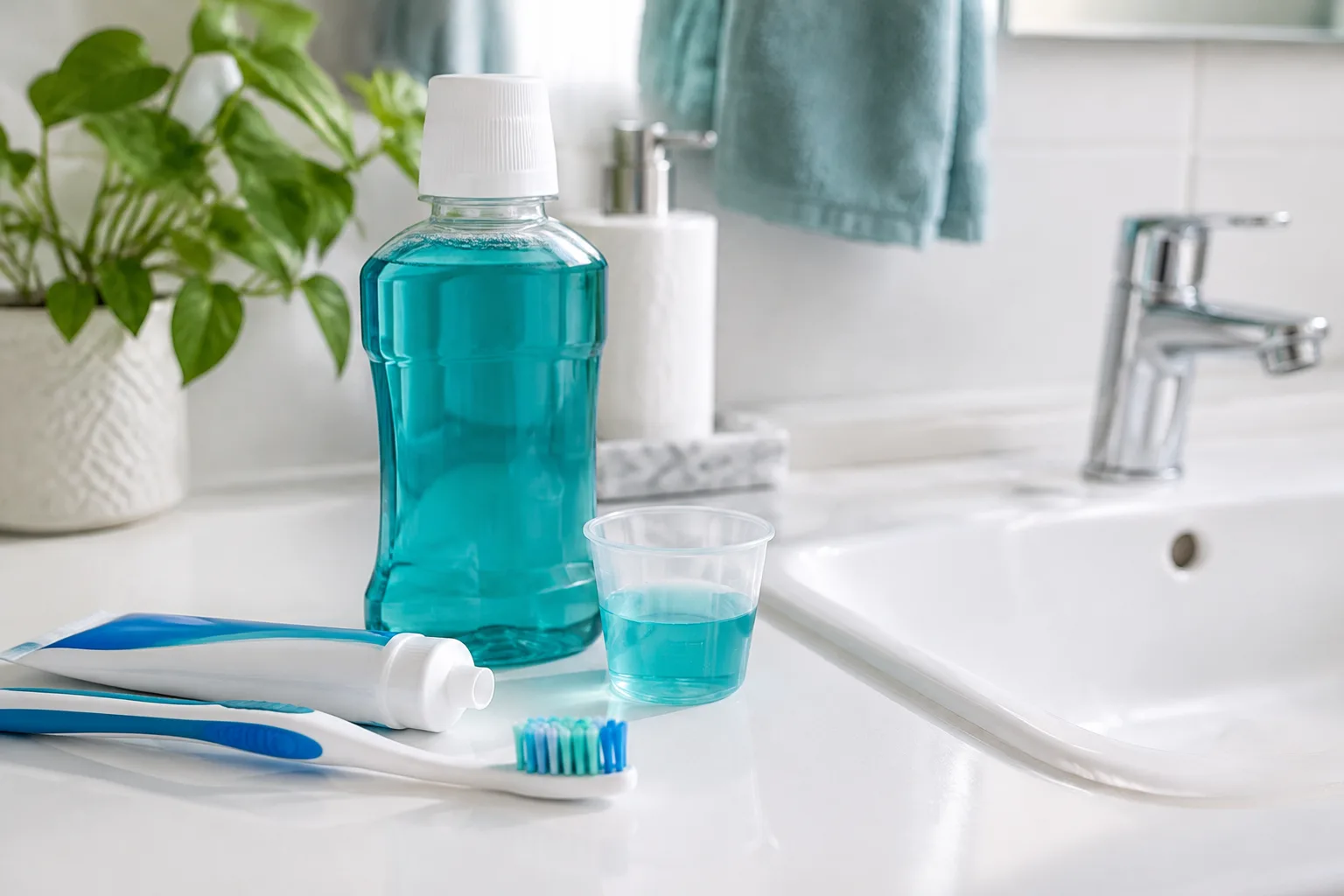
Quick answerRinsing with water after brushing can dilute toothpaste fluoride. A fluoride mouthwash is different: one small trial found it raised fluoride levels in saliva after brushing, but NHS guidance still advises using mouthwash at a different time.
Not medical advice. General information only. We don't diagnose or treat. Never try dental treatment at home. Always see a dentist about symptoms.
Two long‑standing mouthwash mantras get repeated in bathrooms and dental surgeries alike: antibacterial rinses don’t really help, and rinsing after brushing washes fluoride away. The latest UK guidance and several large reviews suggest both ideas need fine‑tuning.
Researchers have found that certain antiseptic mouthrinses can cut plaque and gum inflammation when used alongside proper brushing and interdental cleaning. And while water rinsing after brushing does lower fluoride left from toothpaste, a fluoride mouthwash behaves differently in the mouth.
What happened
UK implementation of the European S3‑level periodontal guideline advises that, where brushing and interdental cleaning alone aren’t controlling plaque or gingival inflammation, a targeted toothpaste and/or mouthrinse with a proven active ingredient can be considered. This UK position (published in 2021) is designed to help personalise self‑care for people struggling with bleeding gums despite good technique.
Backing that approach, a systematic review and meta‑analysis in the Journal of Clinical Periodontology (2020) pooled six‑month randomised trials of adjunctive antiseptics and found statistically significant extra reductions in gingival bleeding, gingival index and plaque compared with mechanical cleaning alone. This means, on average, adding a well‑studied mouthrinse gave better gum outcomes than brushing and interdental cleaning by themselves.
When the same review looked at specific agents, essential‑oil combinations used with brushing showed significant additional plaque reductions over six months. Chlorhexidine and essential‑oil rinses were also ranked among the most efficacious options for improving plaque and gingival indices during supportive periodontal care in the evidence assessments behind the S3‑level guidance.
Separately, a 2015 meta‑analysis in the Journal of the American Dental Association combined 29 six‑month trials of an essential‑oil mouthrinse used with routine mechanical cleaning. At six months, 36.9% of users achieved at least half their tooth surfaces free of plaque versus 5.5% with mechanical methods alone, indicating a clinically meaningful difference in plaque control for many participants.
On the fluoride front, UK public health guidance remains clear that patients should “spit, don’t rinse” after brushing. NHS‑endorsed prevention advice explains that rinsing with water right after brushing dilutes the fluoride concentration left on teeth from toothpaste, reducing its protective effect against decay.
However, a small randomised crossover study in the Journal of Clinical Dentistry (2012) reported a different effect when people rinsed with a fluoride mouthwash immediately after brushing with standard 1,450 ppm fluoride toothpaste. Compared with not rinsing, both 225 ppm and 500 ppm fluoride mouthwashes significantly increased fluoride levels in saliva for at least an hour.
The background
Mechanical cleaning remains the foundation of oral hygiene. Twice‑daily brushing with a fluoride toothpaste and daily interdental cleaning clear the biofilm that drives gum disease. Our explainer on whether a smart toothbrush can replace flossing shows why neither tech nor rinses substitute for physically disrupting plaque.
Antiseptic mouthrinses are intended as an add‑on when plaque control is hard to maintain, not as a shortcut. The S3‑level guideline looks across multiple formulations and advises choosing an adjunct based on individual need and tolerability. Chlorhexidine is typically reserved for short courses because it can stain teeth and alter taste; NHS advice notes these drawbacks and the importance of following product directions.
Essential‑oil mouthrinses have been studied extensively over six months, with consistent reductions in plaque and gingival inflammation when used alongside brushing and interdental cleaning. That benefit doesn’t mean everyone needs one; it signals a role when gums remain inflamed despite good technique or when dexterity challenges make plaque control difficult.
Fluoride mouthwash serves a different purpose: decay prevention. UK guidance commonly suggests a daily fluoride mouthwash of around 225 ppm fluoride for people at higher risk of tooth decay, used at a different time from brushing to avoid washing away toothpaste fluoride on the tooth surface. This timing advice is practical for most households and reflects long‑standing NHS messaging.
So where does the 2012 study fit? It measured fluoride in saliva, not on the tooth surface, for 60 minutes after brushing. The higher salivary fluoride seen with immediate post‑brushing fluoride rinsing suggests potential benefit, but it does not overturn UK advice to separate mouthwash and brushing times. It’s a useful nuance if you occasionally rinse, but not a green light to abandon current guidance.
Mouthwash can’t fix diet‑related risks either. Frequent sugary or acidic drinks fuel decay and erosion, and no rinse will undo repeated exposures. If you’re rethinking refreshments, see our guide to what the soft drinks levy changes could mean for teeth.
For families, sticking to the basics still pays off: supervise children’s brushing, use the right fluoride level for age, and keep routine consistent. Our overview of what the school‑based supervised toothbrushing scheme means explains why simple habits move the needle more than add‑ons.
What people are saying
UK periodontal experts implementing the S3‑level guidance emphasise tailoring self‑care: antiseptic rinses can help where mechanical plaque control alone isn’t cutting it, but choice and duration matter. Their evidence grading placed essential‑oil and chlorhexidine rinses among the most effective for improving plaque and gingival indices in supportive care.
NHS‑endorsed prevention advice keeps the post‑brushing message simple: “spit, don’t rinse”. The rationale is that water rinsing drops fluoride concentration on teeth, which matters for people at risk of decay. That advice coexists with evidence that a fluoride mouthwash can increase salivary fluoride if used right after brushing.
Researchers behind the 2020 meta‑analysis conclude that adjunctive antiseptics deliver statistically significant improvements, averaged across many trials. The 2015 JADA review similarly reports a greater proportion of plaque‑free tooth sites with an essential‑oil rinse added to mechanical cleaning over six months.
Dentists and hygienists also caution against long‑term, unsupervised chlorhexidine use due to staining and taste disturbance, and remind patients that some toothpaste ingredients can interact with antiseptics if used at the same moment. Staggering products through the day sidesteps most of these practical snags.
Patients often ask whether mouthwash can replace flossing or an electric brush. The answer remains no: rinses reach fluid‑accessible areas but can’t scrub sticky biofilm from interdental nooks. Our feature on smart toothbrushes versus flossing unpacks why both approaches target different parts of the job.
What happens next
At home, keep the hierarchy clear: brush well with fluoride toothpaste twice a day, clean between teeth daily, then consider a mouthwash if gums still bleed or plaque builds quickly. If you add one, match it to your goal: an antiseptic rinse for gum management, or a fluoride rinse for decay risk.
Most people will get on best using mouthwash at a different time from brushing, such as after lunch, aligning with NHS advice and avoiding product clashes. If you do occasionally rinse straight after brushing, be aware that water lowers fluoride on teeth, while a fluoride mouthwash has been shown to raise salivary fluoride in the short term.
If gums bleed for more than a week, breath worsens, or you have persistent toothache, arrange a dental check‑up rather than leaning on mouthwash. Children under six should not use mouthwash unless a dentist advises, due to swallowing risk. Anyone with ulcers, sore tissues or medical conditions should ask their dental team before starting antiseptic rinses.
For many, the next step is a hygiene appointment to refine technique and choose the simplest routine you’ll actually stick to. Mouthwash can be a helpful extra—but it’s the basics that do the heavy lifting over time.
Related: Electricity‑generating toothbrush: does it reduce plaque?
Why this matters
For UK readers, the takeaway is practical: mouthwash can help in the right slot, but it’s not a shortcut. If plaque or bleeding gums persist, ask your dentist or hygienist whether an antiseptic rinse suits you and how long to use it. If decay risk is high, discuss daily fluoride mouthwash and timing. For brushing and interdental basics that still matter most, see our guide on smart brushes versus flossing (/article/can-a-smart-toothbrush-replace-flossing).
Common questions
- does rinsing after brushing wash away fluoride
- Rinsing with water after brushing dilutes toothpaste fluoride. A fluoride mouthwash is different: one small study showed it increased salivary fluoride after brushing, but NHS guidance still advises using mouthwash at another time.
- is antibacterial mouthwash actually evidence based
- Yes. Meta‑analyses of six‑month trials show adjunctive antiseptic rinses reduce plaque and gingival bleeding beyond brushing and interdental cleaning alone, supporting their use in selected cases.
- should i use mouthwash before or after brushing
- Use it at a different time from brushing for most people, per NHS advice. This avoids diluting toothpaste fluoride and sidesteps potential interactions with some toothpaste ingredients.
- which is better for gums, chlorhexidine or essential oil mouthwash
- Both have evidence for improving plaque and gingival indices as adjuncts. Chlorhexidine is usually for short‑term use due to staining and taste changes; essential‑oil rinses are studied for longer daily use.
- can mouthwash replace flossing or interdental brushes
- No. Mouthwash can’t physically disrupt plaque between teeth. Daily interdental cleaning plus twice‑daily brushing remains essential for gum health.
- what fluoride strength is in daily mouthwash in the uk
- Daily fluoride mouthwashes typically contain around 225 ppm fluoride. UK guidance often recommends them for higher decay risk, used at a different time from toothbrushing.
- is it safe to use mouthwash every day
- Fluoride or essential‑oil mouthwashes are commonly used daily as directed. Chlorhexidine is usually short‑term. If irritation, staining or taste changes occur, stop and seek dental advice.
- when should i see a dentist instead of relying on mouthwash
- See a dentist if gums bleed for more than a week, you have persistent toothache, mouth sores, loose teeth, or swelling. For severe swelling affecting breathing or swallowing, seek emergency help.
Sources
This article was written by The Smile using the sources listed above. Last updated 15 November 2026. It does not name or recommend brands; sponsorship appears only in clearly labelled panels.